
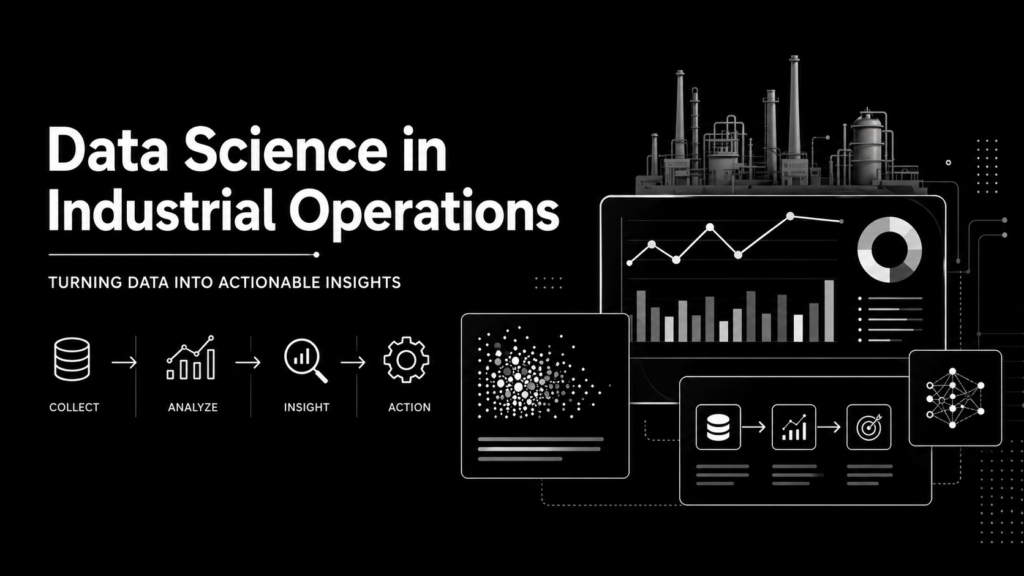
Data Science in Industrial Operations: Turning Data into Actionable Insights
Industrial environments generate vast amounts of data from machines, sensors, and operational systems. However, data alone does not create value unless it is analyzed and transformed into meaningful insights.
Data science enables organizations to interpret this data, identify patterns, and support informed decision-making. By combining structured data with advanced analytics, organizations can improve efficiency, reduce risks, and optimize performance across operations.
What Is Data Science in Industrial Operations?
Data science is the process of analyzing large datasets to extract insights, identify trends, and support decision-making. In industrial environments, it involves working with data collected from connected systems to improve operational outcomes.
Supported by data engineering platforms, data science relies on structured and reliable data to deliver accurate insights.
- Analysis of large and complex datasets
- Identification of patterns and trends
- Data-driven decision support
- Continuous performance evaluation
Transforming Data into Actionable Insights
The primary goal of data science is to turn raw data into actionable insights that can be used to improve operations. By analyzing historical and real-time data, organizations can identify inefficiencies and opportunities for optimization.
Integrated with Industrial Data & AI Intelligence, data science enables organizations to move from data collection to value creation.
- Identification of operational inefficiencies
- Performance optimization opportunities
- Improved planning and forecasting
- Better resource management
Supporting Predictive and Analytical Capabilities
Data science enables predictive capabilities by analyzing historical data and identifying patterns that indicate future outcomes. This allows organizations to anticipate issues and take proactive action.
Leveraging IoT solutions, data is continuously collected and analyzed to support predictive insights.
- Predictive maintenance support
- Trend analysis and forecasting
- Improved risk management
- Enhanced operational planning
Enhancing Decision-Making Across Operations
By providing accurate and timely insights, data science improves decision-making across all levels of an organization. Teams can rely on data rather than assumptions, leading to more consistent and effective outcomes.
Through integration with visual analytics platforms, insights can be presented in a clear and accessible format.
- Data-driven decision-making
- Improved operational control
- Faster response to changing conditions
- Enhanced collaboration across teams
Integration with AI and Intelligent Systems
Data science works closely with AI systems to enhance analytical capabilities. AI models use data science outputs to generate predictions, recommendations, and automated insights.
By leveraging AI-driven solutions, organizations can further enhance operational intelligence and efficiency.
- Advanced analytics and modeling
- Improved prediction accuracy
- Automated insights generation
- Continuous system optimization
Conclusion
Data science is a key driver of modern industrial operations. By transforming raw data into actionable insights, it enables organizations to improve performance, reduce risks, and make smarter decisions.
As industrial systems become more connected, data science will continue to play a central role in unlocking the full value of operational data.
Disclaimer: This article is provided for informational purposes only. It describes data science concepts and analytical approaches without representing performance guarantees or specific system outcomes.
FAQ
What is data science in industrial operations?
Data science in industrial operations involves analyzing data from machines, sensors, and systems to extract insights that improve performance and support decision-making.
How does data science improve industrial performance?
Data science improves performance by identifying patterns, detecting inefficiencies, and providing insights that help optimize operations and reduce risks.
What types of data are used in industrial data science?
Industrial data science uses data from sensors, equipment performance, environmental conditions, and operational systems.
How does data science support predictive maintenance?
By analyzing historical and real-time data, data science helps identify patterns that indicate potential equipment issues before they occur.
What is the difference between data engineering and data science?
Data engineering focuses on collecting and structuring data, while data science focuses on analyzing that data to generate insights and support decision-making.
Can data science improve decision-making in industrial environments?
Yes, data science provides accurate and timely insights that enable organizations to make informed, data-driven decisions.
How does AI work with data science in industrial systems?
AI uses the outputs of data science to generate predictions, automate insights, and support more advanced analytical capabilities.
Which industries benefit from industrial data science?
Industries such as manufacturing, energy, logistics, and facility management benefit from data science by improving efficiency and operational control.