
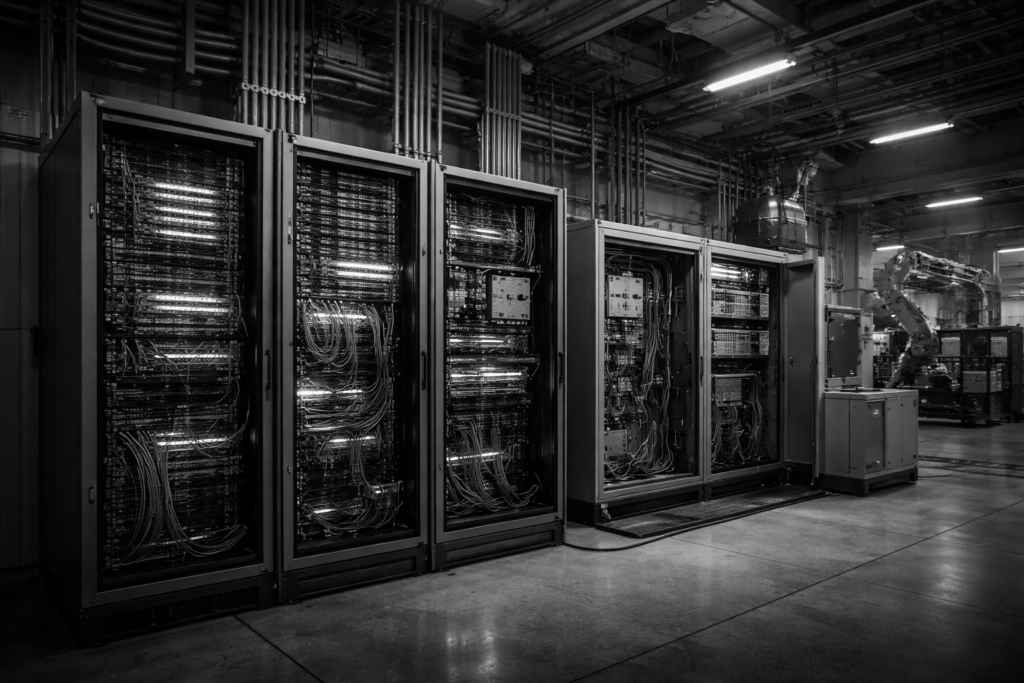
Data Engineering in Industrial Systems: Building a Scalable Data Foundation
Industrial environments generate vast amounts of data from machines, sensors, and operational systems. However, without a structured approach to managing this data, organizations often struggle to extract meaningful insights and maintain operational efficiency.
Data engineering provides the foundation for collecting, integrating, and organizing data across systems. Through connected IoT solutions and structured pipelines, organizations can transform raw data into a reliable and scalable resource for decision-making.
What Is Data Engineering in Industrial Systems?
Data engineering is the process of designing and managing data pipelines that collect, process, and store data from multiple sources. In industrial environments, this includes integrating data from machines, sensors, and enterprise systems into a unified structure.
By leveraging data engineering platforms, organizations can ensure that data is accurate, accessible, and ready for analysis.
- Integration of data from multiple sources
- Data transformation and structuring
- Centralized data storage
- Reliable data pipelines
Breaking Down Data Silos
One of the primary challenges in industrial systems is the presence of data silos, where information is stored in isolated systems. This limits visibility and makes it difficult to analyze data across operations.
Data engineering addresses this challenge by integrating data into a unified structure, enabling seamless communication between systems and supporting Industrial Data & AI Intelligence.
- Unified data across systems
- Improved accessibility and consistency
- Enhanced cross-functional visibility
- Better collaboration across teams
Enabling Real-Time Data Processing
Modern industrial operations require real-time data processing to support immediate decision-making. Data engineering pipelines enable continuous data flow from connected systems, ensuring that information is available as events occur.
With support from visual analytics platforms, real-time data can be visualized and interpreted effectively.
- Continuous data ingestion
- Real-time data availability
- Faster response to operational events
- Improved situational awareness
Supporting Advanced Analytics and AI
Data engineering is essential for enabling advanced analytics and AI applications. Without structured and reliable data, it is not possible to generate accurate insights or build effective models.
By integrating with data science and analytics and AI-driven solutions, data engineering creates a complete ecosystem for intelligent operations.
- High-quality data for analysis
- Support for predictive models
- Improved decision accuracy
- Scalable analytics capabilities
Building a Scalable Data Infrastructure
A key benefit of data engineering is the ability to build scalable data infrastructure that can grow with organizational needs. As operations expand, data systems must be able to handle increasing volumes and complexity.
Through structured data architectures and integration strategies, organizations can ensure long-term performance and adaptability.
- Scalable data pipelines
- Flexible system integration
- Support for future expansion
- Long-term operational sustainability
Conclusion
Data engineering is the foundation of modern industrial systems. By enabling data integration, improving visibility, and supporting advanced analytics, it plays a critical role in driving operational efficiency and innovation.
As industrial environments continue to evolve, organizations that invest in strong data engineering capabilities will be better positioned to achieve scalable, data-driven success.
Disclaimer: This article is provided for informational purposes only. It describes data engineering concepts and operational approaches without representing performance guarantees or specific system outcomes.
FAQ
What is data engineering in industrial systems?
Data engineering is the process of collecting, integrating, and structuring data from industrial systems such as machines, sensors, and enterprise platforms to make it usable for analysis and decision-making.
Why is data engineering important in industrial environments?
Data engineering ensures that data is accurate, organized, and accessible, allowing organizations to gain insights, improve operations, and support advanced analytics and AI applications.
What are data pipelines in industrial systems?
Data pipelines are structured processes that collect, process, and transfer data from multiple sources into centralized systems for storage and analysis.
How does data engineering help eliminate data silos?
Data engineering integrates data from different systems into a unified platform, allowing seamless access and analysis across the organization.
Can data engineering support real-time monitoring?
Yes, data engineering enables real-time data processing, allowing organizations to monitor operations and respond immediately to changes.
How does data engineering support AI and analytics?
Data engineering provides clean, structured data that is essential for building accurate analytics models and AI systems.
Is data engineering scalable for industrial operations?
Yes, data engineering frameworks are designed to scale with growing data volumes and increasing system complexity.
Which industries benefit from data engineering?
Industries such as manufacturing, energy, logistics, and facility management benefit from data engineering by improving data visibility and operational performance.