
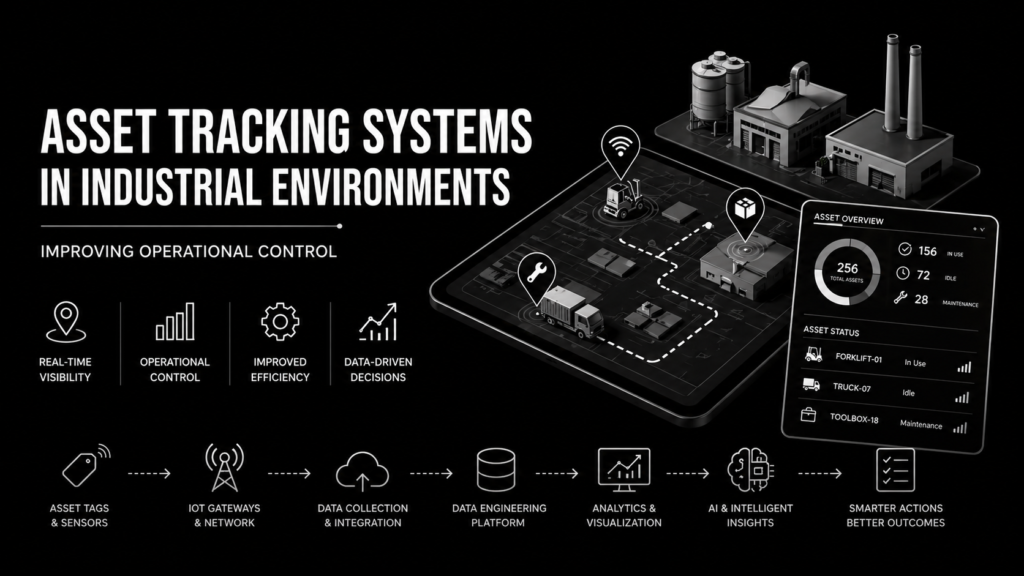
Asset Tracking Systems in Industrial Environments: Improving Operational Control
In industrial environments, managing assets efficiently is critical to maintaining operational performance. However, many organizations face challenges in tracking equipment, tools, and resources across multiple locations, leading to inefficiencies and reduced visibility.
Asset tracking systems, powered by IoT solutions, provide real-time visibility into asset location, usage, and status. By connecting physical assets to digital systems, organizations can improve control and optimize operations.
What Are Asset Tracking Systems?
Asset tracking systems are technologies that monitor and manage the location and condition of assets using connected devices such as sensors, tags, and tracking systems. These systems provide real-time information that supports operational decision-making.
Through integration with data engineering platforms, asset data is structured and made accessible across the organization.
- Real-time asset location tracking
- Monitoring of asset usage and status
- Centralized visibility across facilities
- Integration with operational systems
Improving Visibility Across Operations
One of the key benefits of asset tracking systems is enhanced visibility. Organizations can monitor where assets are located and how they are being used, reducing uncertainty and improving coordination.
With support from visual analytics platforms, asset data can be visualized through dashboards that provide clear insights into operational activity.
- Real-time tracking of asset movement
- Improved asset utilization
- Reduced time spent searching for equipment
- Better coordination across teams
Enhancing Operational Control and Efficiency
Asset tracking systems enable organizations to maintain better control over their operations by providing accurate and timely information about asset availability and usage.
When combined with Industrial Data & AI Intelligence, asset tracking becomes a powerful tool for optimizing workflows and improving efficiency.
- Optimized asset allocation
- Reduced operational delays
- Improved planning and scheduling
- Enhanced overall efficiency
Supporting Data-Driven Decision-Making
The data collected through asset tracking systems provides valuable insights that support better decision-making. Organizations can analyze asset usage patterns and identify opportunities for improvement.
Leveraging data science and analytics, asset data can be transformed into actionable insights that drive operational improvements.
- Data-driven resource management
- Identification of inefficiencies
- Improved operational planning
- Continuous performance optimization
Integration with AI and Intelligent Systems
When integrated with AI, asset tracking systems can provide predictive insights and automated recommendations. AI models analyze asset data to identify trends and support more intelligent decision-making.
Through AI-driven solutions, organizations can enhance operational intelligence and improve asset management strategies.
- Predictive insights on asset usage
- Automated alerts and notifications
- Improved asset lifecycle management
- Enhanced operational intelligence
Conclusion
Asset tracking systems are essential for modern industrial environments. By providing real-time visibility, improving operational control, and enabling data-driven decision-making, they help organizations optimize performance and efficiency.
As part of a connected industrial ecosystem, asset tracking plays a key role in supporting smarter, more efficient, and more transparent operations.
Disclaimer: This article is provided for informational purposes only. It describes asset tracking technologies and operational approaches without representing performance guarantees or specific system outcomes.
FAQ
What are asset tracking systems in industrial environments?
Asset tracking systems are technologies used to monitor the location, status, and usage of equipment and resources across industrial operations in real time.
How do asset tracking systems improve operations?
They improve operations by providing real-time visibility of assets, reducing time spent searching for equipment, and improving coordination across teams.
What technologies are used in asset tracking systems?
Asset tracking systems use technologies such as IoT sensors, RFID tags, GPS tracking, and connected platforms to collect and transmit data.
Can asset tracking systems reduce operational delays?
Yes, by ensuring assets are easily located and properly utilized, these systems help reduce delays and improve workflow efficiency.
How do asset tracking systems support decision-making?
They provide accurate data on asset usage and movement, enabling organizations to make informed decisions about resource allocation and operations.
Can asset tracking systems integrate with IoT platforms?
Yes, asset tracking systems are typically integrated with IoT platforms to enable real-time data collection and centralized monitoring.
What are the benefits of real-time asset tracking?
Real-time tracking improves visibility, enhances operational control, reduces losses, and increases overall efficiency.
Which industries benefit from asset tracking systems?
Industries such as manufacturing, logistics, construction, and facility management benefit from asset tracking systems to improve control and efficiency.