
Robotic Automation
Autonomous Systems for Intelligent Warehouse and Logistics Operations
Robotic automation is transforming modern warehouse and logistics environments by enabling autonomous movement of materials, intelligent order handling, and highly scalable fulfillment operations.
As order volumes grow and operational complexity increases, organizations are increasingly adopting robotic technologies to improve operational efficiency, reduce manual handling, and maintain consistent performance across warehouse operations.
Robotic automation systems are designed to perform repetitive logistics tasks such as transporting materials, moving inventory between storage zones, and assisting in order fulfillment processes. Within the Industrial Automation Ecosystem, robotic systems operate alongside conveyor automation, warehouse control platforms, and warehouse management software to support highly efficient and scalable logistics environments.
Robotic Automation Architecture
Robotic systems operate as part of the larger warehouse automation environment.
Typical integration architecture:
Enterprise Systems
ERP — enterprise resource planning for business-wide coordination
Warehouse Management System
WMS — orchestrates inventory, orders, and labor planning
Warehouse Control System
WCS — translates WMS tasks into real-time equipment commands
Robot Fleet Management System
Coordinates autonomous robot tasks, paths, and battery management
Autonomous Robots
Mobile robots executing material transport and fulfillment tasks
Warehouse Operations
Seamless material flow orchestrated across the full stack
The robot fleet management system coordinates the movement of multiple robots while ensuring safe and efficient operations within the warehouse.
Role of Robotics in Warehouse Automation
Robotic technologies enhance warehouse operations by automating tasks that traditionally require manual labor.
Typical robotic applications include:
transporting materials between warehouse zones
supporting order picking operations
moving inventory between storage systems
assisting with sorting and distribution processes
Types of Robotic Systems Used in Warehouses
Modern warehouse automation environments deploy several types of robotic systems depending on operational requirements.
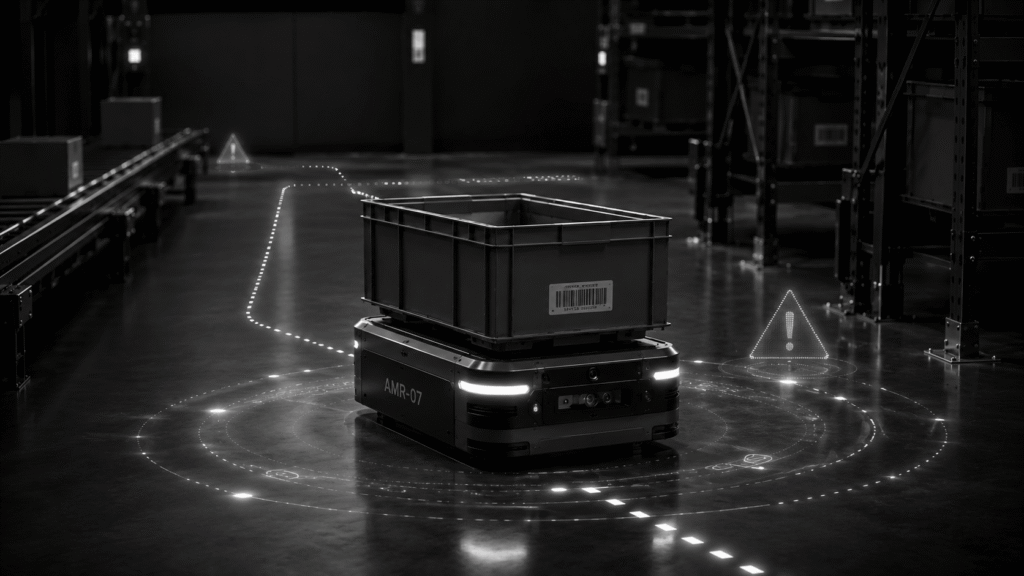
Autonomous mobile robots navigate warehouse environments using onboard sensors and intelligence, without requiring pre-mapping or fixed guidance infrastructure. AMRs adapt dynamically to changing environments, allowing flexible material transportation across warehouse operations.
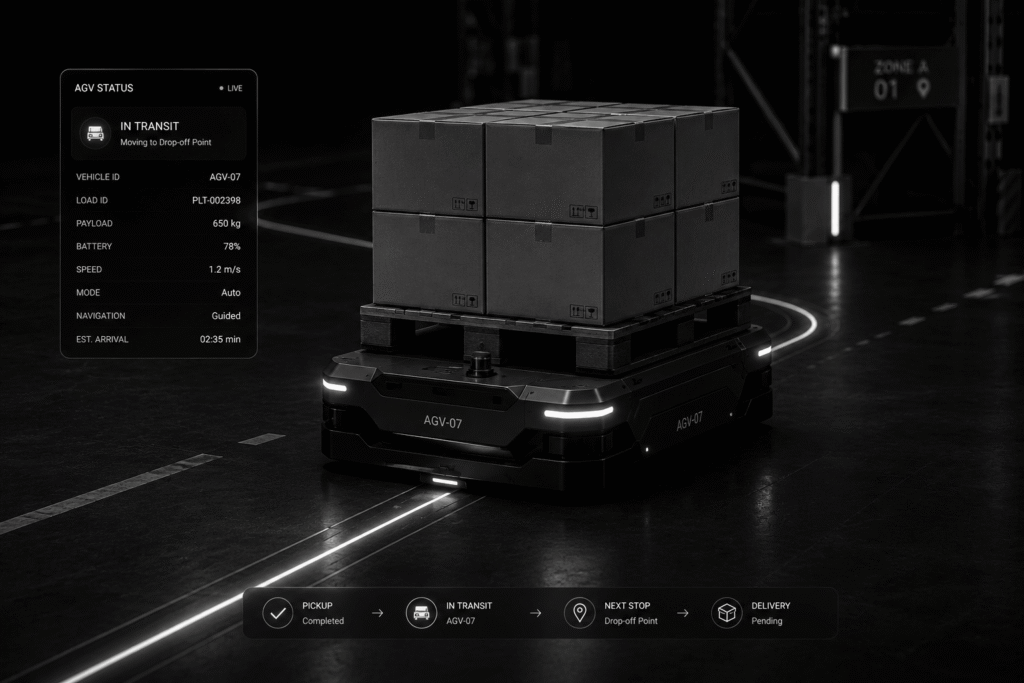
Automated guided vehicles follow predefined paths within warehouse environments using guidance technologies such as magnetic strips, markers, or laser navigation. AGVs are commonly used for transporting pallets, containers, and heavy loads reliably.
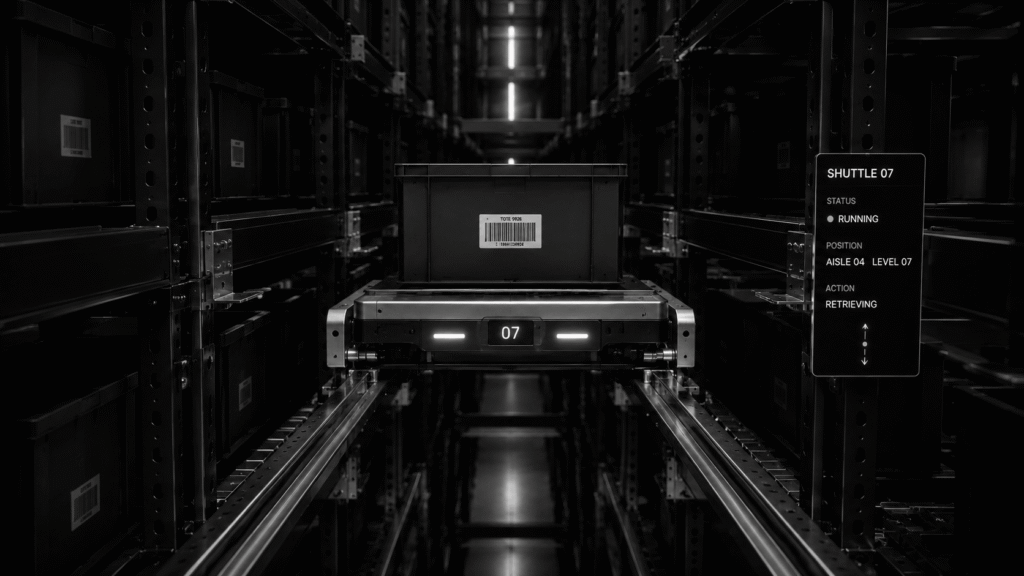
Shuttle systems are robotic storage technologies used within automated storage and retrieval systems. These systems include multilevel shuttles, pallet shuttles, and specialized robots capable of reaching heights of 36 feet to enable high-density inventory storage.
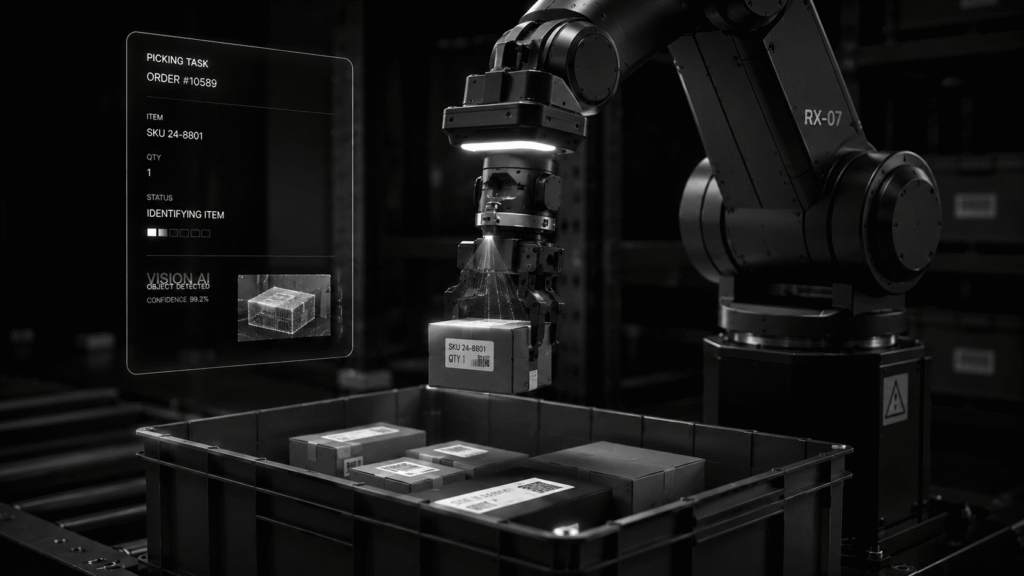
Robotic picking systems use anthropomorphic robotic arms combined with vision systems and artificial intelligence to automate item picking operations. These systems can support order fulfillment processes in high-volume distribution environments.
Benefits of Robotic Warehouse Automation
Increased Operational Throughput Robotic systems enable warehouses to process higher order volumes without increasing manual labor.
Improved Operational Efficiency
Reduced Labor Dependency
Flexible Warehouse Operations
Scalable Automation Infrastructure
Integration With the Automation Ecosystem
Robotic systems operate as part of a larger automation environment and integrate with:
warehouse management systems
warehouse control systems
conveyor automation infrastructure
Pick-to-Light systems
industrial networking platforms
ManuSphere Integration Approach
ManuSphere integrates robotic automation systems into larger warehouse automation architectures. Our engineering teams design robotic automation environments that coordinate with warehouse control platforms, material handling systems, and enterprise software platforms. Through this integration approach, organizations can deploy robotic automation solutions that improve operational efficiency while supporting scalable logistics operations.
Implement Robotic Automation in Your Warehouse
Speak with ManuSphere automation specialists to design robotic automation solutions tailored to your warehouse operations. Our team helps organizations deploy intelligent robotic systems that improve efficiency, scalability, and operational performance.