
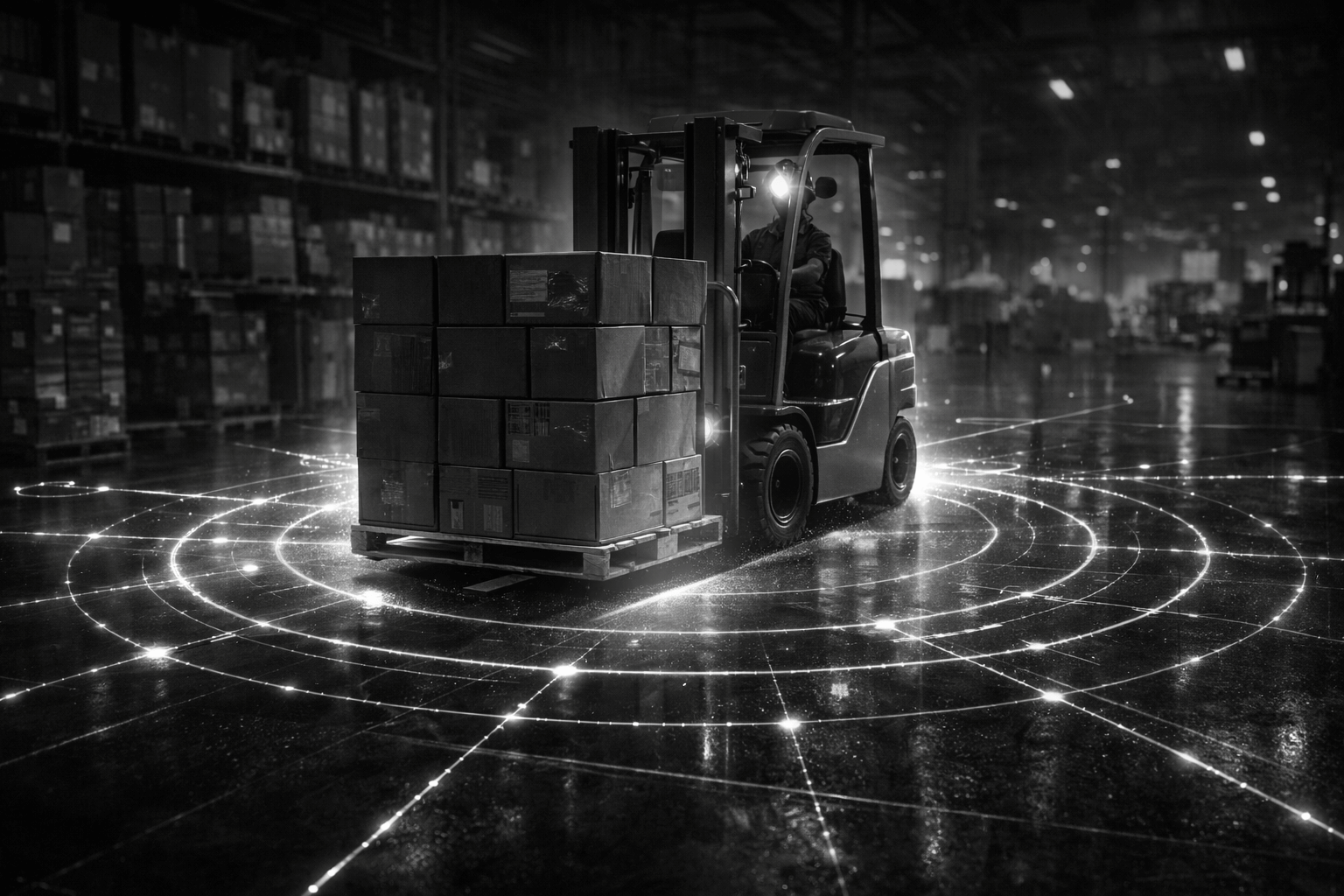
Smart Collision Prevention Systems for Industrial Vehicles and Equipment in Saudi Arabia (2026)
Industrial vehicles and heavy equipment operate in environments where visibility, movement coordination, and spatial awareness are critical. Warehouses, logistics hubs, and manufacturing sites often involve forklifts, transport vehicles, overhead structures, and pedestrian activity within the same operational space.
Smart collision prevention systems provide structured monitoring and proximity awareness to support safer and more controlled industrial movement. At Manusphere, these systems are delivered as integrated safety solutions in collaboration with global technology partners.
What Are Smart Collision Prevention Systems?
Smart collision prevention systems use sensors, proximity detection devices, connected infrastructure, and monitoring platforms to identify potential interaction between vehicles, equipment, and personnel. These systems provide real-time alerts and visibility within defined operational areas.
Risks in Warehouse and Industrial Environments
Warehouses and manufacturing facilities involve dynamic vehicle movement, blind spots, loading zones, and high-traffic corridors. Without structured monitoring, close proximity between forklifts, trucks, overhead structures, and workers can create operational risk.
Vehicle Collision Prevention Solutions
Vehicle Collision Prevention systems are designed to detect proximity between vehicles and surrounding objects or personnel. These systems use connected devices to generate alerts when predefined distance thresholds are reached.
Indoor Overhead Safety Monitoring
Indoor Overhead Safety solutions monitor height clearance within warehouses and industrial buildings. This supports visibility when forklifts or tall equipment operate near overhead structures.
Outdoor Overheight Detection Systems
Outdoor Overheight Safety systems are used in logistics yards and industrial entry points. These systems detect vehicles exceeding height limits before entering restricted areas.
Integration with Workforce Tracking Systems
Collision prevention systems can integrate with workforce tracking infrastructure to improve situational awareness across facilities. By combining location visibility and vehicle proximity monitoring, supervisors gain better oversight of operational movement.
Role of IoT Connectivity and Edge Processing
These systems rely on Industrial IoT connectivity to transmit proximity data to monitoring dashboards. In some deployments, local processing through Edge AI Gateways enables immediate detection and alert triggering without dependency on remote servers.
Applications in Warehouses and Logistics Hubs
In warehouse environments, smart collision prevention supports forklift operations, loading docks, storage aisles, and pedestrian interaction zones. Real-time alerts improve movement coordination within confined or high-density areas.
Applications in Manufacturing and Heavy Industrial Sites
In heavy industrial facilities, these systems assist in monitoring heavy vehicle movement, machinery interaction, and overhead clearance within production plants and processing environments.
Operational Advantages
- Improved visibility of vehicle and equipment proximity
- Structured monitoring of high-traffic operational zones
- Real-time alerts based on predefined safety thresholds
- Integration with centralized monitoring dashboards
- Scalable deployment across multiple facilities
Manusphere’s Role as a Safety Systems Integrator
Manusphere acts as a technology integrator and facilitator, deploying smart collision prevention infrastructure tailored to industrial and logistics environments in Saudi Arabia. The company collaborates with established partners to design and implement systems aligned with site-specific operational requirements.
The Future of Industrial Movement Monitoring
As industrial operations become more connected, structured movement monitoring will remain an important part of operational oversight. Smart collision prevention systems support improved coordination and data-driven management of vehicle and equipment activity.
Disclaimer: This article is provided for informational purposes only. It describes collision prevention technologies and integration services without representing performance guarantees or regulatory certifications.
FAQ
What is a smart collision prevention system?
A smart collision prevention system uses proximity sensors, connected devices, and monitoring platforms to detect potential interactions between vehicles, equipment, and personnel within industrial environments.
How do industrial collision prevention systems work?
These systems use sensors to measure distance and detect nearby objects or personnel. When predefined thresholds are reached, alerts are generated to increase operator awareness.
Where are collision prevention systems typically deployed?
They are commonly deployed in warehouses, logistics hubs, manufacturing plants, distribution centers, and heavy industrial sites where vehicle movement and pedestrian activity coexist.
What is the difference between indoor and outdoor safety systems?
Indoor systems often focus on proximity detection and overhead clearance within buildings. Outdoor systems typically monitor vehicle height and movement at entry points, yards, and loading zones.
Can collision prevention systems integrate with workforce tracking solutions?
Yes. Collision prevention systems can integrate with workforce tracking infrastructure to enhance situational awareness by combining vehicle proximity data with personnel location visibility.
What role does IoT connectivity play in these systems?
Industrial IoT networks enable real-time transmission of proximity and movement data to centralized monitoring dashboards. Reliable connectivity ensures continuous system visibility.
Do collision prevention systems replace operator responsibility?
No. These systems are designed to support operational awareness and provide alerts. They complement existing operational procedures but do not replace operator judgment or site safety policies.
Can these systems scale across multiple facilities?
Yes. Collision prevention infrastructure can be deployed across single or multiple sites, depending on operational requirements and network design.
Does Manusphere manufacture the hardware used in collision prevention systems?
Manusphere acts as a technology integrator and facilitator. The company works with established global partners to deploy proximity detection and monitoring solutions tailored to client environments.
What operational advantages do smart collision prevention systems provide?
They support improved vehicle awareness, structured monitoring of high-traffic zones, centralized visibility through dashboards, and better coordination between vehicles and personnel within industrial environments.