
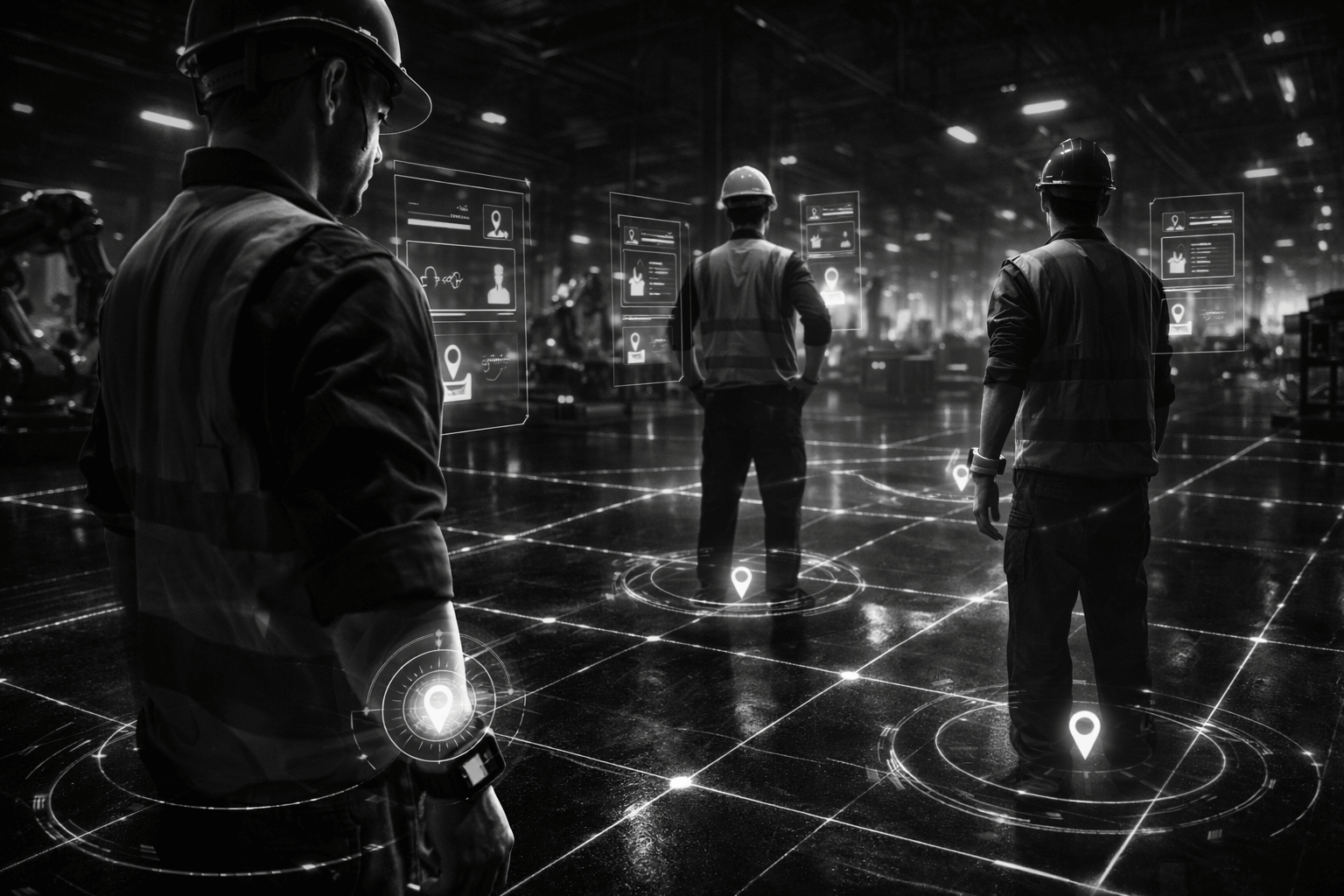
Real-Time Workforce Tracking for Industrial and Facility Safety in Saudi Arabia (2026)
Real-time workforce tracking is becoming an essential component of industrial and facility operations in Saudi Arabia. As industrial sites expand and operations become more complex, organizations require accurate visibility into personnel movement, location awareness, and operational zones.
Through integrated IoT connectivity and tracking infrastructure, Manusphere enables workforce visibility solutions designed for industrial, logistics, and facility environments.
What Is Real-Time Workforce Tracking?
Real-time workforce tracking refers to the use of connected tracking devices, sensors, and network infrastructure to monitor personnel location within defined operational areas. These systems provide visibility into movement patterns and zone occupancy across facilities and industrial sites.
Why Workforce Visibility Matters in Industrial Operations
Large facilities, warehouses, and industrial sites often involve restricted zones, heavy equipment movement, and multi-shift operations. Workforce tracking supports situational awareness by allowing supervisors to understand where personnel are located during working hours.
Wide-Area Tracking Systems
Wide-Area Tracking solutions are designed for large outdoor or distributed sites. These systems use IoT connectivity to provide location visibility across extended operational environments.
Zone-Level Personnel Monitoring
Zone-Level Tracking systems allow organizations to define specific operational zones within a facility. Alerts can be configured when personnel enter or exit predefined areas, improving visibility within sensitive or high-activity zones.
High-Precision Tracking in Industrial Facilities
For environments requiring higher location accuracy, High-Precision Tracking solutions provide enhanced positional visibility within structured indoor environments.
Role of IoT Connectivity in Workforce Tracking
Tracking systems rely on stable Industrial IoT connectivity. LoRaWAN networks, gateways, and wireless infrastructure enable continuous data transmission between wearable tracking devices and monitoring dashboards.
Integration with Monitoring and Analytics Platforms
Tracking data can be integrated into centralized dashboards and analytics platforms. Supervisors gain operational insight through real-time visualizations of personnel distribution across sites.
Applications in Manufacturing and Facility Management
In manufacturing, workforce tracking helps coordinate teams across production areas. In facility management, it supports visibility across maintenance crews, security teams, and service personnel within large buildings or campuses.
Operational Advantages
- Improved situational awareness across operational zones
- Better coordination of workforce deployment
- Clear visibility during multi-shift operations
- Structured access management to defined areas
- Centralized monitoring through digital dashboards
Manusphere’s Role as a Workforce Tracking Integrator
Manusphere acts as a technology integrator and facilitator. By working with established global partners, the company deploys workforce tracking infrastructure tailored to client-specific operational environments across Saudi Arabia.
The Future of Workforce Visibility in Saudi Operations
As industrial and facility environments continue to evolve, real-time workforce visibility will remain an important element of operational management. Connected tracking systems support structured coordination and data-driven oversight across expanding operations.
Disclaimer: This article is provided for informational purposes only. It describes workforce tracking technologies and integration services without representing performance guarantees or regulatory certifications.
FAQ
What is real-time workforce tracking?
Real-time workforce tracking uses connected devices and network infrastructure to monitor personnel location within defined industrial or facility environments. It provides operational visibility into workforce distribution across sites.
How does workforce tracking improve operational visibility?
Workforce tracking systems allow supervisors to view personnel locations in real time through centralized dashboards. This supports coordination, zone management, and structured workforce deployment.
What technologies are used in workforce tracking systems?
Workforce tracking typically uses wearable tracking devices, IoT connectivity such as LoRaWAN or Wi-Fi networks, gateways, and monitoring software platforms that visualize movement and zone activity.
What is the difference between wide-area and zone-level tracking?
Wide-area tracking covers large outdoor or distributed sites and provides broader location visibility. Zone-level tracking defines specific areas within a facility and monitors entry and exit events within those zones.
Can workforce tracking be used indoors and outdoors?
Yes. Tracking systems can be designed for indoor facilities, warehouses, industrial plants, and outdoor operational environments depending on network infrastructure and tracking technology deployed.
How does IoT connectivity support workforce tracking?
IoT networks transmit location data from wearable devices to gateways and monitoring platforms. Reliable connectivity ensures continuous and consistent data flow for accurate visualization.
Is workforce tracking only for safety purposes?
While workforce tracking supports situational awareness in operational environments, it is also used for coordination, workforce planning, zone access management, and performance visibility.
Can workforce tracking integrate with analytics platforms?
Yes. Location data can be integrated into centralized dashboards and analytics platforms to provide historical reporting, occupancy trends, and operational insights.
Does Manusphere manufacture tracking devices?
Manusphere acts as a solutions integrator and facilitator. The company collaborates with established global technology partners to deploy workforce tracking systems tailored to specific operational requirements.
Which industries benefit from workforce tracking systems?
Manufacturing facilities, logistics hubs, warehouses, industrial plants, construction sites, and large commercial buildings benefit from workforce tracking due to the need for structured personnel visibility.