
Warehouse & Logistics Automation
The Operational Execution Layer of the Industrial Automation Ecosystem
Warehouse and logistics operations represent the execution core of modern supply chains. As fulfillment volumes increase and delivery expectations tighten, distribution environments must process higher order volumes while maintaining speed, accuracy, and operational efficiency.
Manual processes alone cannot support these requirements. Modern warehouses depend on automation technologies that coordinate order processing, material movement, and inventory handling across interconnected systems.
Within the Industrial Automation Ecosystem, warehouse and logistics automation functions as the operational execution layer, responsible for managing the physical flow of products across distribution environments. At ManuSphere, we design and implement integrated warehouse automation architectures that connect picking technologies, conveyor systems, control platforms, and warehouse management software into a unified operational environment.
Warehouse Automation Architecture
Modern warehouse automation systems operate across multiple technology layers that coordinate the movement of products and information throughout the facility.
A typical automation architecture includes:
Enterprise Systems
ERP — enterprise resource planning for business-wide coordination
Warehouse Management System
WMS — orchestrates inventory, orders, and labor planning
Warehouse Control System
WCS — translates WMS tasks into real-time equipment commands
Automation Control Layer
PLC / Controllers — real-time logic driving motors, sensors, and actuators
Automation Equipment
Physical systems executing material handling and fulfillment
Coordinated Material Flow Across Warehouse Operations
End-to-end visibility and synchronization across the full stack
Each layer performs a defined function, ensuring that operational workflows and material movement are executed in a synchronized and efficient manner.
Key Warehouse Automation Technologies
Warehouse automation environments rely on multiple technologies working together to manage order fulfillment and material handling processes.
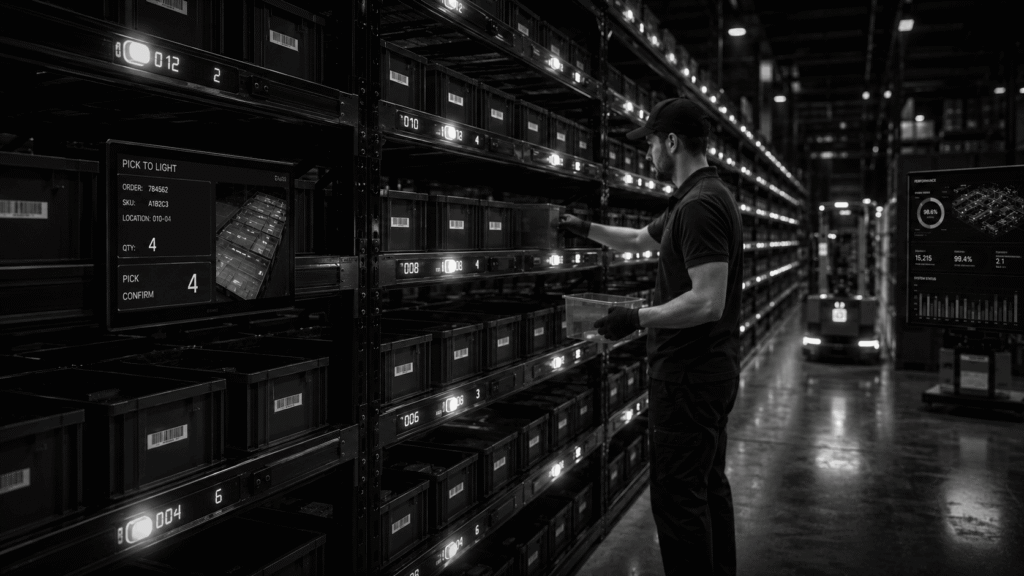
Pick-to-Light systems improve order picking efficiency by guiding operators through visual LED-based instructions at storage locations. The system receives picking tasks from the Warehouse Management System (WMS) and directs operators to the correct location and quantity in real time. This approach significantly increases picking speed by 2–3x compared to manual methods while maintaining high accuracy exceeding 99%.
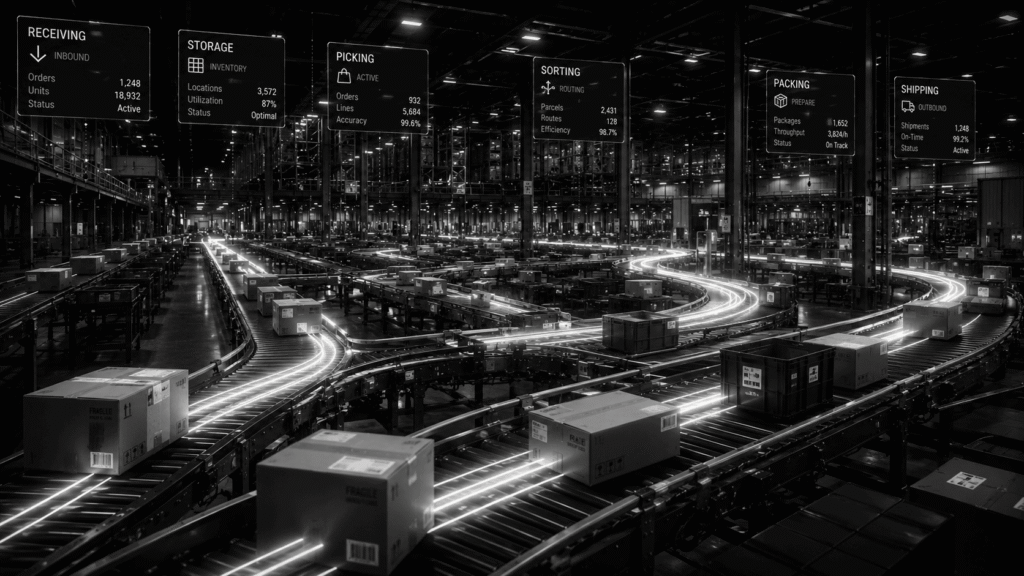
Conveyor Automation Systems
Conveyor automation systems enable continuous and automated transportation of products across warehouse operations. These systems move cartons, totes, and parcels between key operational zones including receiving, storage, picking, sorting, packing, and shipping. By eliminating manual transportation, conveyor systems maintain consistent material flow and reduce operational bottlenecks.
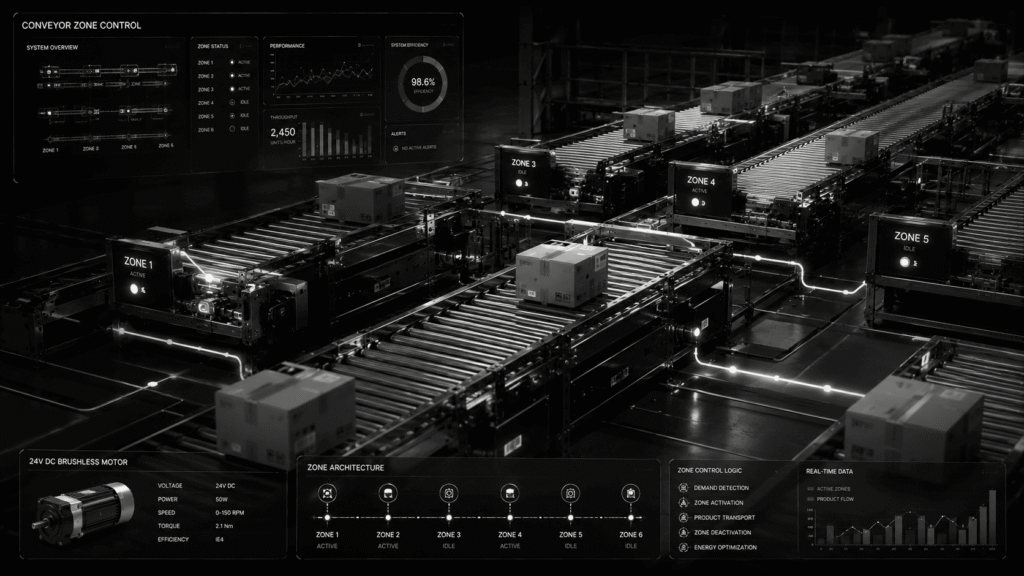
Motor-Driven Roller (MDR) Systems
Motor-Driven Roller (MDR) systems represent advanced conveyor technology based on decentralized, zone-driven architecture utilizing 24V DC brushless motors. Each conveyor zone is powered by an integrated motorized roller, allowing independent operation based on product presence. This approach improves energy efficiency by >30%, lowers operational noise to <65 dB, and increases system reliability compared to traditional conveyor systems.
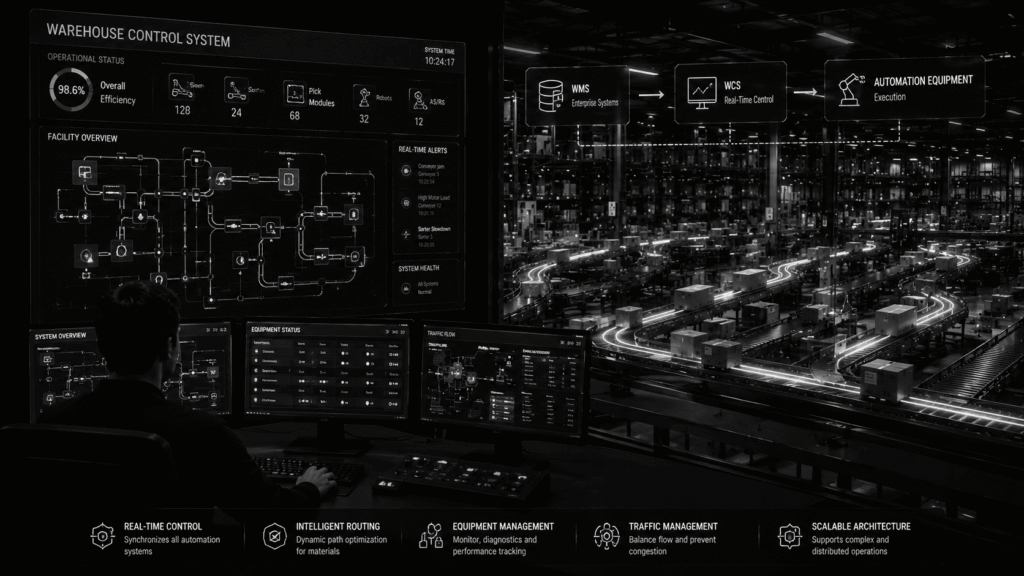
Warehouse Control Systems act as the operational intelligence layer that coordinates automation equipment across the facility. The WCS translates high-level instructions from the WMS into real-time commands that control conveyors, picking systems, routing logic, and material flow. This ensures synchronized operation across all automation technologies within the warehouse environment.
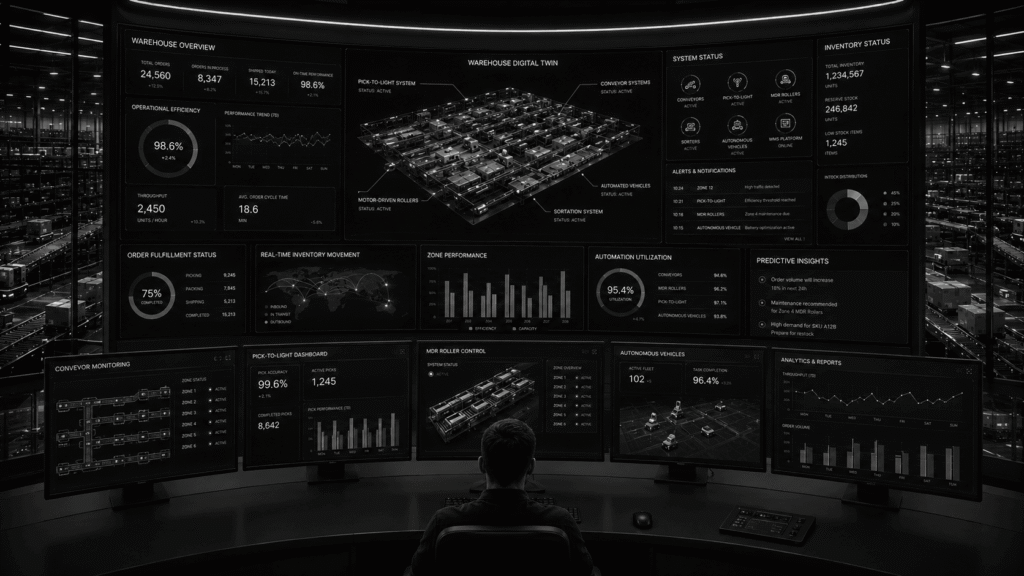
Warehouse automation technologies deliver maximum value when they operate as part of a unified system. System integration connects warehouse management platforms, control systems, automation equipment, and industrial networking infrastructure into a coordinated operational environment. ManuSphere specializes in designing and implementing integrated warehouse automation architectures tailored to specific operational requirements.
Operational Benefits of Warehouse Automation
Implementing integrated warehouse automation systems provides measurable operational advantages
Increased Throughput
Improved Accuracy
Reduced Operational Costs
Real-Time Operational Visibility
Industries Using Warehouse Automation
Warehouse automation solutions support a wide range of industries
including:
E-commerce fulfillment centers
retail distribution warehouses
pharmaceutical logistics
manufacturing supply chains
spare parts logistics operations
parcel and courier hubs
Building Intelligent Warehouse Operations
Within the Industrial Automation Ecosystem, warehouse automation operates alongside robotic systems, conveyor and material handling infrastructure, industrial networking platforms, and digital software environments. ManuSphere integrates these technologies to create intelligent warehouse environments capable of supporting modern supply chain operations.
Start Your Warehouse Automation Project
Speak with ManuSphere specialists to design an integrated warehouse automation solution tailored to your facility. Our engineering team helps organizations implement automation systems that improve efficiency, accuracy, and scalability across warehouse operations.