
System Integration
Connecting Automation Technologies into a Unified Operational Environment
Modern warehouse and industrial environments rely on multiple technologies working together, including picking systems, conveyor infrastructure, robotic solutions, control systems, and industrial networks.
Each technology plays a specific role. However, real operational efficiency is achieved only when these systems operate as one coordinated environment.
Within the Industrial Automation Ecosystem, system integration is the layer that connects these technologies enabling communication between warehouse management systems, control systems, and physical automation equipment.
This approach reflects our comprehensive automation ecosystem, where secure networking, warehouse technologies, robotic systems, and logistics solutions operate together through coordinated system integration.
System Integration Architecture
Integrated automation environments follow a structured flow that connects software platforms with operational systems.
Warehouse Management System (WMS)
Orchestrates inventory, orders, and labor planning
Control Systems (WCS / Controllers)
Translate WMS tasks into equipment commands
Automation Control Layer (PLC)
Real-time logic driving motors, sensors, and actuators
Automation Technologies
Physical equipment executing the workflow
Warehouse Operations
Continuous material flow across the full stack
Key System Integration Capabilities
System integration connects different technologies into a single operational workflow.
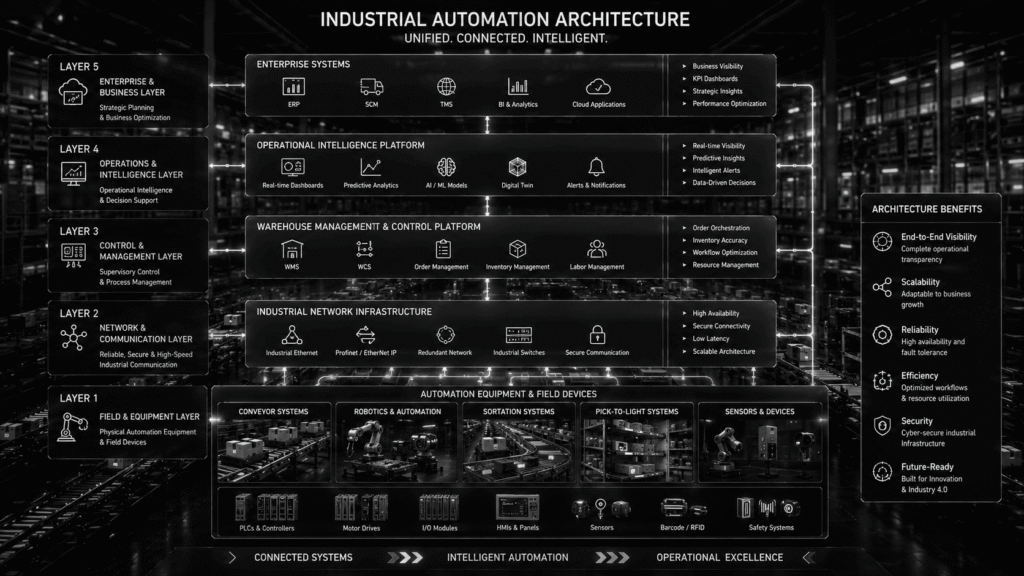
Design Automation systems are structured based on operational requirements, defining how warehouse systems, control layers, and automation technologies work together.
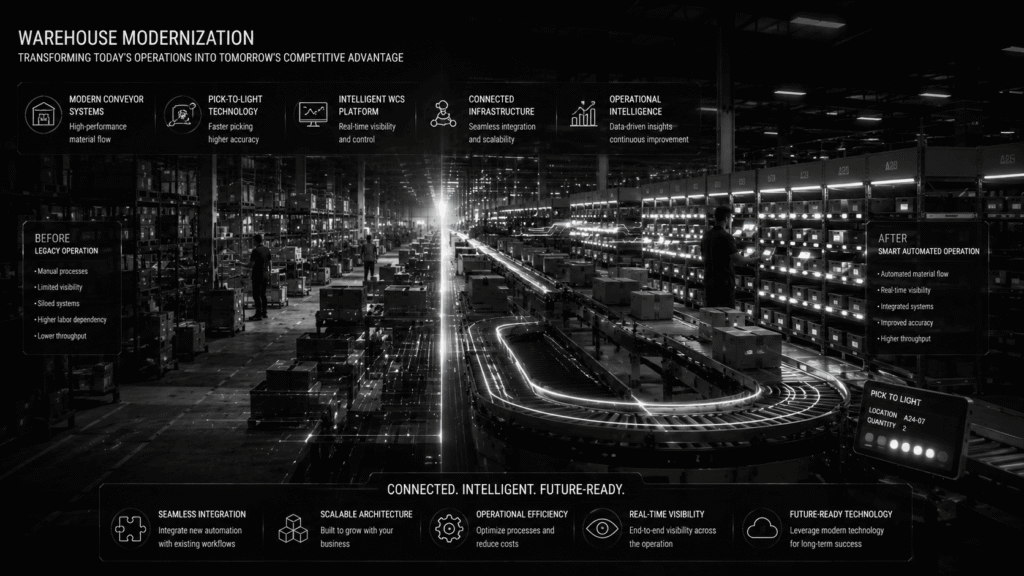
Existing warehouse environments can be upgraded by integrating new automation technologies such as conveyors, visual Pick-to-Light systems, and intelligent control systems into current operations.
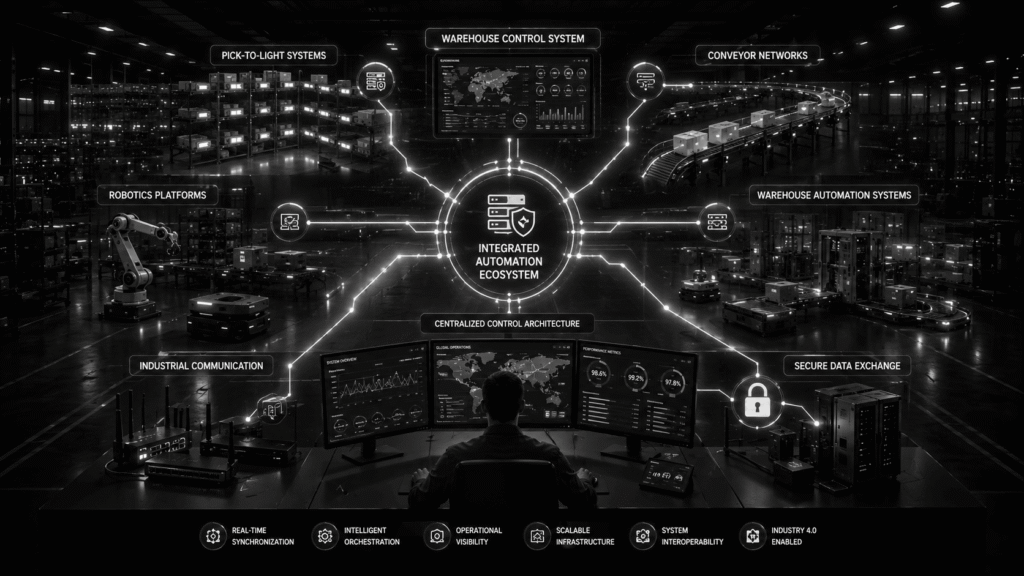
Automation environments often include multiple technologies such as picking systems, conveyors, and robotics. System integration ensures these systems operate together through coordinated control systems and highly secure industrial communication.
Operational Benefits of System Integration
Implementing integrated automation systems provides clear operational advantages.
Coordinated Operations
Real-Time Workflow Execution
Improved Material Flow
Reduced Operational Complexity
Scalable Automation Environment
Industries Using Integrated Automation
System integration is used across industries that depend on efficient logistics and automation operations.
Common applications include:
E-commerce fulfillment centers
retail distribution networks
pharmaceutical and healthcare supply chains
manufacturing and production logistics
parcel and courier logistics hubs
Integrated Automation Within the Ecosystem
Within the Industrial Automation Ecosystem, system integration connects:
Typical robotic applications include:
warehouse automation technologies
conveyor and material handling systems
robotic automation platforms
industrial networking infrastructure
digital systems such as WMS
This integration ensures all systems operate together as a coordinated automation environment.
Start Your System Integration Project
Speak with ManuSphere specialists to design and implement integrated automation systems tailored to your operational requirements. Our team helps organizations connect technologies, improve workflows, and build efficient automation environments.