Automated Material Flow Infrastructure for Industrial and Warehouse Operations
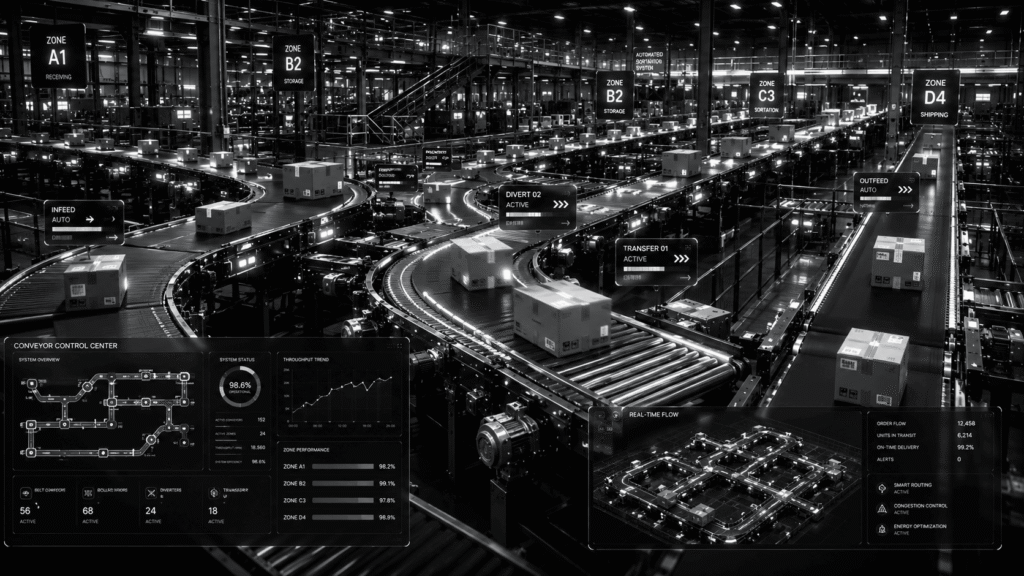
Efficient material movement is a fundamental requirement in modern warehouses, distribution centers, and industrial facilities. Conveyor and material handling systems provide the infrastructure that enables products, cartons, totes, and pallets to move seamlessly across operational environments. These systems form the backbone of automated logistics operations, connecting receiving, storage, picking, sorting, packing, and shipping processes. Modern material handling environments combine conveyor technologies, motor-driven roller systems, automation controllers, and warehouse control platforms to create highly efficient material flow systems. Within the Industrial Automation Ecosystem, conveyor and material handling technologies integrate with warehouse automation platforms, robotics systems, and industrial networking infrastructure to support scalable logistics operations.
Role of Conveyor Systems in Industrial Automation
Conveyor infrastructure enables automated transportation of materials across operational facilities.
Typical functions include:
moving products between warehouse zones
connecting storage systems with picking stations
supporting automated sorting operations
enabling continuous material flow across logistics processes
By automating product movement, conveyor systems help reduce manual handling while improving operational efficiency and throughput.
Key Conveyor & Material Handling Technologies
Modern automation environments deploy different types of material handling infrastructure depending on operational requirements.
Conveyor automation systems enable the continuous and automated transportation of products. These systems utilize belt conveyors, roller conveyors, automated sortation mechanisms, and transfer systems to move cartons and pallets seamlessly across warehouse zones.
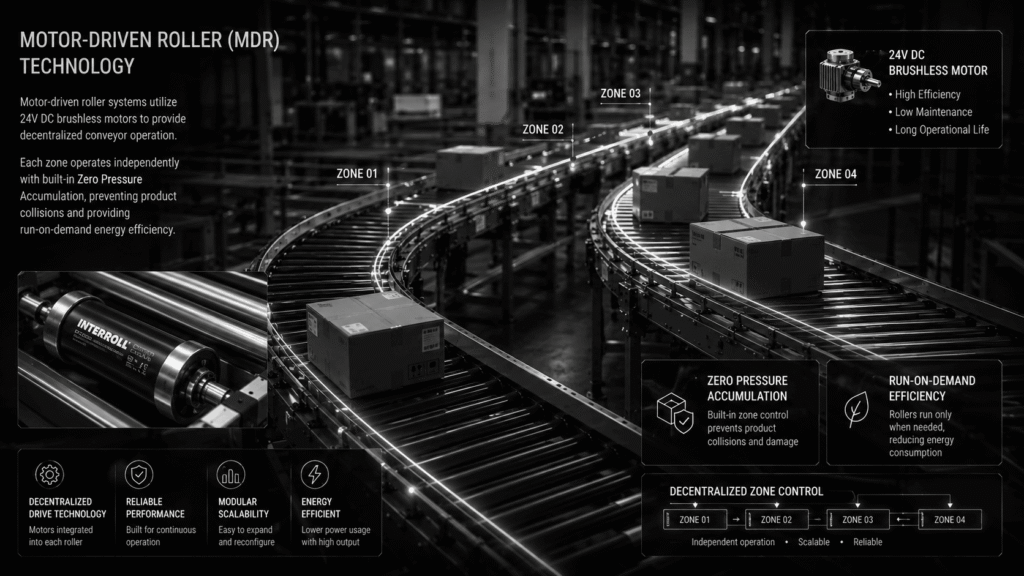
Technology Motor-driven roller systems utilize 24V DC brushless motors to provide decentralized conveyor operation. Each zone operates independently with built-in Zero Pressure Accumulation, preventing product collisions and providing run-on-demand energy efficiency.
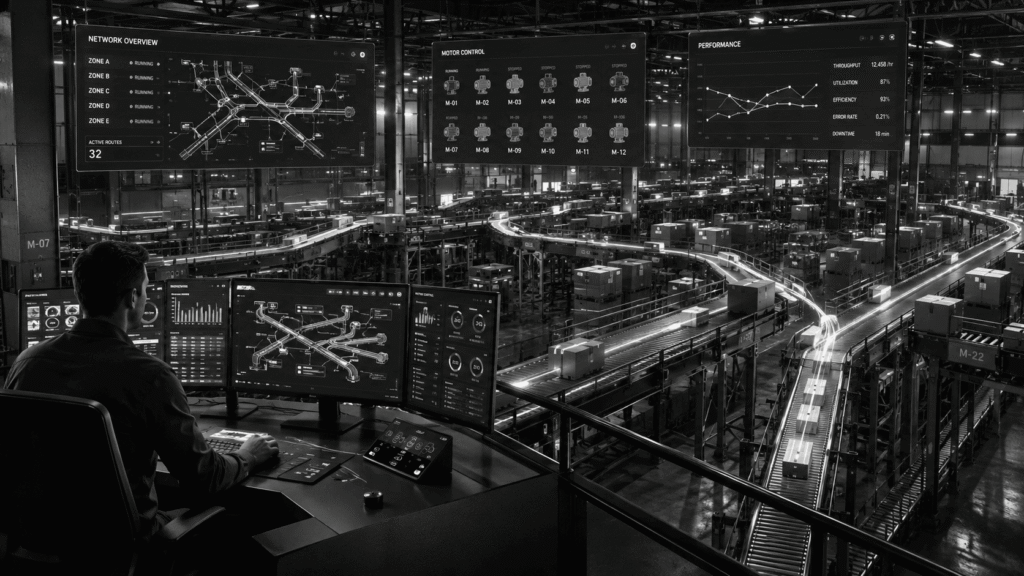
Conveyor control platforms act as the intelligence layer responsible for managing conveyor operations. These platforms coordinate routing logic, control motor activation, and maintain smooth material flow across the entire logistics environment.
Reduced Operational Costs Automation reduces reliance on manual labor and material handling equipment while providing >30% power savings through run-on-demand technology.
Scalable Infrastructure Modular conveyor systems allow facilities to expand automation capacity easily.
Improved Operational Reliability Automated material flow systems provide consistent and predictable logistics operations with exceptionally low noise (<65 dB).
Integration with Warehouse Automation
Conveyor systems integrate with multiple technologies within the Industrial Automation Ecosystem.
These include:
Pick-to-Light systems
robotic automation platforms
automated storage systems
warehouse control systems
industrial networking infrastructure
ManuSphere Integration Approach
ManuSphere designs and integrates conveyor and material handling systems that support efficient logistics operations across warehouses and industrial facilities. Our engineering teams implement conveyor infrastructure that connects automation technologies, warehouse software platforms, and industrial networking environments into a coordinated automation architecture. This approach enables organizations to deploy scalable material handling systems that support modern supply chain operations.
Build Efficient Material Handling Infrastructure
Speak with ManuSphere automation specialists to design conveyor and material handling systems tailored to your operational environment. Our team helps organizations implement automated material flow solutions that improve operational efficiency and logistics performance.