
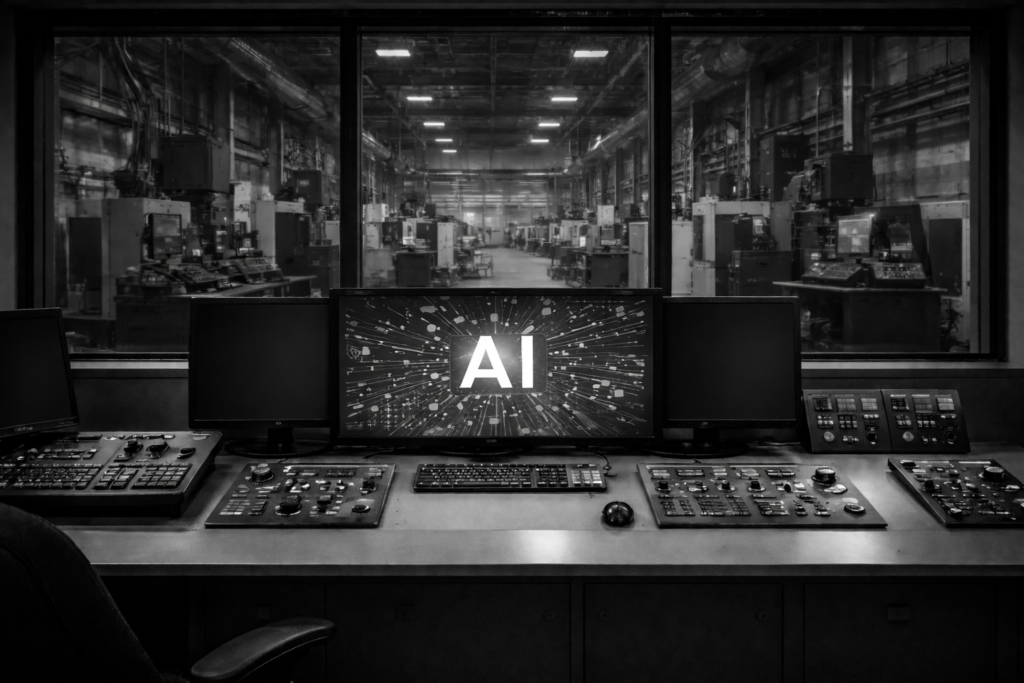
AI in Industrial Operations: Enabling Smarter and More Autonomous Systems
Industrial operations are becoming increasingly data-driven, with vast amounts of information generated from machines, sensors, and connected systems. However, managing and interpreting this data manually can be complex and time-consuming.
Artificial Intelligence (AI) enables organizations to analyze data at scale, identify patterns, and support automated decision-making. By integrating AI into industrial systems, organizations can enhance efficiency, improve performance, and move toward more intelligent operations.
What Is AI in Industrial Operations?
AI in industrial operations refers to the use of advanced algorithms and models to analyze data, generate insights, and support decision-making processes. It enables systems to learn from data and improve performance over time.
Supported by data science and analytics, AI transforms raw data into meaningful insights that drive operational improvements.
- Automated data analysis
- Pattern recognition and anomaly detection
- Continuous learning and improvement
- Data-driven decision support
Enhancing Operational Efficiency
AI helps improve operational efficiency by analyzing data in real time and identifying opportunities for optimization. It reduces the need for manual intervention and supports more consistent performance across systems.
When integrated with IoT solutions, AI can process continuous data streams and provide actionable insights.
- Improved process efficiency
- Reduced operational variability
- Optimized resource utilization
- Enhanced system performance
Enabling Predictive and Autonomous Capabilities
AI enables predictive capabilities by analyzing historical and real-time data to anticipate future outcomes. This allows organizations to take proactive action and reduce risks.
Through integration with Industrial Data & AI Intelligence, AI supports the development of more autonomous systems.
- Predictive maintenance and forecasting
- Automated decision-making processes
- Reduced human intervention in routine tasks
- Improved operational reliability
Supporting Real-Time Decision-Making
AI enables faster decision-making by processing large volumes of data in real time. This allows organizations to respond quickly to changes and optimize operations continuously.
Combined with visual analytics platforms, AI insights can be presented clearly for immediate action.
- Real-time insights and alerts
- Faster response to operational changes
- Improved situational awareness
- Enhanced decision accuracy
Integration with Data Engineering and Systems Infrastructure
AI relies on strong data infrastructure to function effectively. Data engineering ensures that data is structured, reliable, and accessible for AI models to process.
Through integration with data engineering platforms, organizations can build scalable and efficient AI-driven systems.
- Reliable data pipelines for AI processing
- Scalable infrastructure for advanced analytics
- Improved system integration
- Enhanced operational intelligence
Conclusion
AI is transforming industrial operations by enabling smarter, more efficient, and more autonomous systems. By analyzing data, generating insights, and supporting decision-making, AI helps organizations improve performance and reduce complexity.
As industrial systems continue to evolve, AI will play an increasingly important role in driving innovation and operational excellence.
Disclaimer: This article is provided for informational purposes only. It describes AI technologies and operational approaches without representing performance guarantees or specific system outcomes.
FAQ
What is AI in industrial operations?
AI in industrial operations refers to the use of algorithms and data models to analyze data, generate insights, and support automated decision-making across industrial systems.
How does AI improve industrial efficiency?
AI improves efficiency by analyzing large volumes of data in real time, identifying patterns, and optimizing processes without the need for constant manual intervention.
What role does AI play in predictive maintenance?
AI analyzes historical and real-time data to identify patterns that indicate potential equipment failures, helping organizations take proactive maintenance actions.
Can AI automate industrial processes?
Yes, AI can automate certain processes by generating recommendations, triggering alerts, and supporting decision-making based on real-time data.
How does AI work with IoT in industrial systems?
IoT collects real-time data from sensors and devices, while AI processes that data to generate insights and support operational improvements.
Is AI reliable for industrial decision-making?
AI supports decision-making by providing data-driven insights, but it works best when combined with human oversight and proper system design.
What is required to implement AI in industrial environments?
Implementing AI requires structured data, strong data engineering infrastructure, and integration with existing systems such as IoT platforms.
Which industries benefit from AI in operations?
Industries such as manufacturing, energy, logistics, and facility management benefit from AI by improving efficiency, reducing risks, and enhancing operational control.